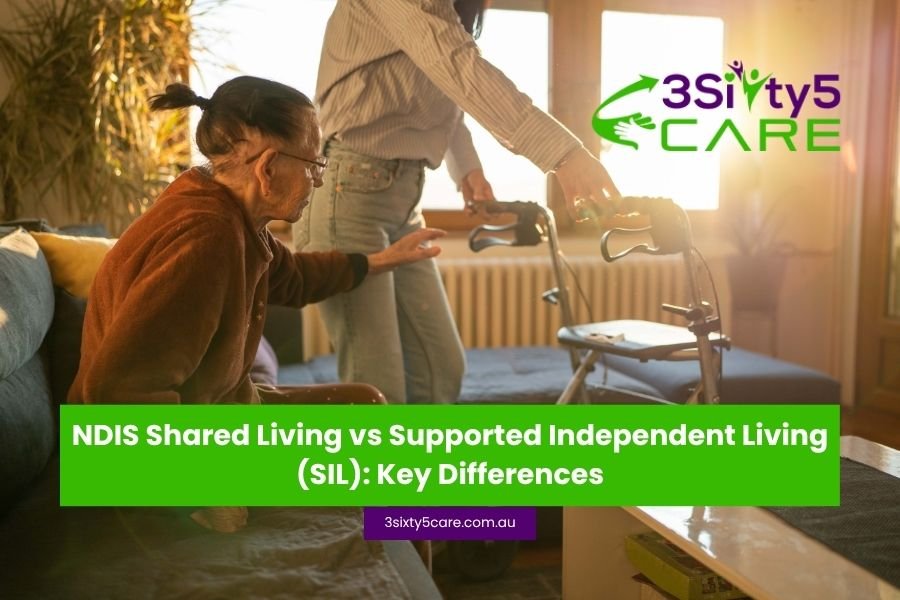
NDIS Shared Living is a housing option where participants live with a host family or in a small group home. The participant becomes part of a household and receives support as needed. This can include help with daily activities, meals, transport, and social interaction.
Shared Living is best suited to individuals who prefer a home-like setting and like staying with others. Participants will be able to acquire social skills, form friendships, and feel as if they are a part of a family or a home. The support is adaptable, needs specific, and can be very personalised.
Shared Living offers several advantages:
Shared Living works best with individuals who enjoy a family-like atmosphere and can experience day-to-day social support but are somewhat autonomous.
Supported Independent Living (SIL) is a NDIS support option that enables participants to live on their own, as they receive the support they need. SIL tends to be housed in a group house or apartment environment, so that participants can have their own individual rooms, but they share communal space such as a kitchen or a living room.
The focus of SIL is to help participants develop skills for independent living. This can include managing finances, cooking, cleaning, personal care, and navigating the community. SIL provides a structured environment with professional support staff available as needed.
SIL offers different advantages compared to Shared Living:
SIL is best suited to people who wish to live independently but still require support. It is appropriate for individuals who are willing to assume greater responsibility in the management of their day-to-day life.
Understanding the differences between Shared Living and SIL is crucial when choosing the right option:
This table makes it easy to see the main differences and helps participants match their needs with the right option.
When comparing SIL vs shared living NDIS Australia, it’s important to recognise that both options are designed to support independence — but they differ significantly in structure, support levels, and participant experience.
In Victoria, especially for participants exploring supported living arrangements in Melbourne, you may also come across NDIS host family accommodation in Melbourne. This is a unique option in which a participant lives with a host family who provides everyday support, fostering social connection and stability.
Here’s how the main supported living models differ:

Supported Independent Living (SIL)
Designed for people who need ongoing, time-based support with daily living tasks.
Support is typically provided in shared homes with trained support workers.
SIL focuses on skill development, independence, and community access.
Shared Living
The participant lives with housemates or in a shared residential setting.
Shared living may offer more flexibility in support routines.
Participants often benefit from shared responsibilities and community feeling.
NDIS Host Family Accommodation
A hosted living setting where a participant is supported within a family environment.
Ideal for those who prefer one-on-one support while maintaining independence.
Encourages community connection and everyday life involvement.
Difference Between SIL and SDA
While SIL and SDA (Specialist Disability Accommodation) are sometimes mentioned together, they serve different purposes:
SIL (Supported Independent Living) focuses on support services to help with day-to-day living.
SDA (Specialist Disability Accommodation) focuses on housing design — accommodations with specialised features to meet specific disability needs.
Understanding the difference between SIL and SDA is key when planning your NDIS supports. One secures the right environment, while the other ensures the right type of support.
An experienced provider will guide you through SIL, shared living, and host family options, ensuring your support aligns with your NDIS plan, personal goals, and lifestyle preferences — whether you’re in Melbourne, regional Victoria, or elsewhere in Australia.
In planning between Shared Living and SIL, consider the following:
The participation of the participants, their family, and NDIS planners should also be considered in decision making. The correct decision must be made according to personal desires and capabilities, as well as living style.
At 3SIXTY5 CARE, we are the registered NDIS provider of both Shared Living and SIL services in Melbourne. Our team assists participants to learn their choice and make the most suitable living arrangement to suit their needs.
We offer individualised support plans, professional staff and safe and comfortable houses in both Shared Living and SIL. We aim to ensure that the participants lead a good life and live independently with the appropriate level of care and support.
Choosing the right option depends on the participant’s independence, social needs, and personal goals. With the right support, individuals can enjoy a safe, comfortable, and fulfilling lifestyle. 3SIXTY5 CARE provides guidance and professional support to help participants make the best choice for their life.