
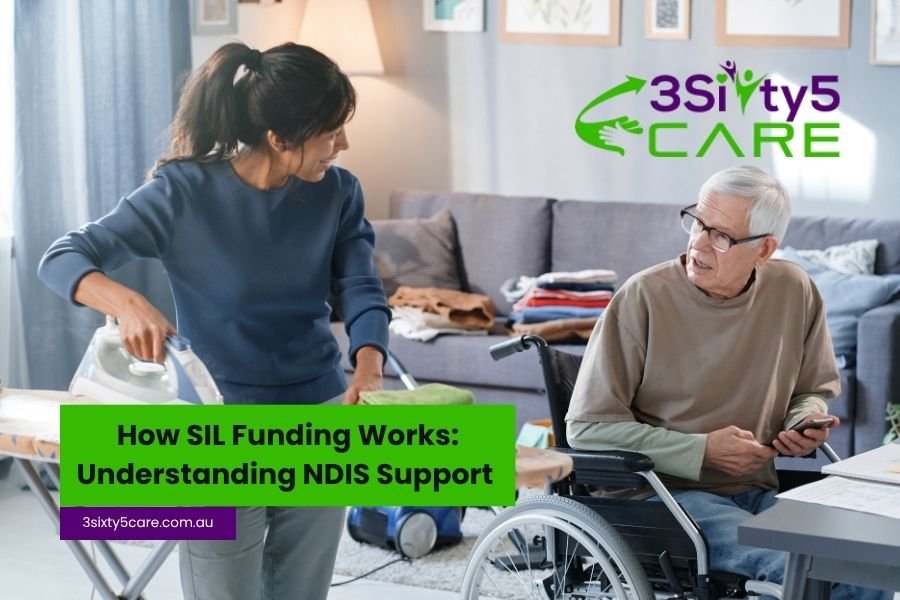
Living independently is a big goal for many people with disabilities. The good news is that Supported Independent Living (SIL) funding can help make this happen. At 3Sixty5 Care, we help people understand SIL and get the support they need to live more freely and confidently.
What Is Supported Independent Living (SIL)?
Who Can Get SIL Funding?
NDIS SIL Eligibility, Application Process, Funding Amounts, and Inclusions vs Exclusions
NDIS SIL Eligibility Criteria: Who Qualifies?
SIL is not available to every NDIS participant — it is specifically designed for those with higher support needs who require regular, ongoing assistance to live safely outside of a clinical or family setting. To meet the NDIS SIL eligibility criteria, a participant generally needs to satisfy all of the following conditions.
First, you must already be an active NDIS participant — SIL cannot be accessed without an existing NDIS plan. Second, your disability must result in significantly reduced functional capacity across multiple daily living areas, such as self-care, mobility, communication, or social interaction, to the extent that you require regular support from trained workers to live safely. Third, the NDIA must determine that SIL is the most appropriate and cost-effective support for your situation — meaning that lower-intensity alternatives such as home and community supports have been considered and are not sufficient to meet your needs.
Fourth, the support must be assessed as reasonable and necessary under NDIS guidelines, which means it must relate directly to your disability, contribute to your long-term independence goals, and represent value for money.
Importantly, SIL eligibility is not determined by diagnosis alone. Two people with the same condition may receive very different assessments depending on their functional capacity, informal support networks, and living circumstances. The NDIA considers the whole picture — not just the disability label.
How to Apply for SIL Funding: The Step-by-Step Process Applying for SIL funding is more involved than applying for most other NDIS supports, and understanding the process upfront prevents delays and frustration. Here is what the pathway looks like in practice:
Step 1 — Gather Supporting Evidence
Step 2 — Submit a Home and Living Application
Step 3 — NDIA Assessment and Decision
The NDIA reviews your application and supporting evidence. This process can take several weeks to months depending on complexity and current NDIA workloads. The NDIA may request additional information, conduct a planning conversation, or arrange a formal assessment before making a decision. If approved, SIL funding is added to your plan under Core Supports — Assistance with Daily Life.
How Much SIL Funding Does the NDIS Provide?
What Does SIL Funding Cover?
- Getting dressed or showering
- Making meals or snacks
- Cleaning your room or doing laundry
- Taking medicine
- Going to appointments or joining activities
What Is Supported Independent Living Accommodation?
Supported independent living accommodation can be a shared house, an apartment, or a private rental. It can be a place you move into alone or with other people who also get NDIS support.
How to Get SIL Funding from the NDIS
What Does SIL Look Like in Real Life?
- Safe, comfortable accommodations that are clean enough
How 3Sixty5 Care Can Help You
- Understanding your NDIS plan
- Applying for SIL funding
- The provision of writing support letters and assessment
- Getting the right accommodation
- To have caring support staff that is trained
Final Thoughts
When you are prepared to find out more about SIL or when you need assistance in getting started, you should contact 3Sixty5 Care today. Let’s talk about your goals and how we can support your journey to independent living in Melbourne
NDIS Supported Independent Living (SIL) — Frequently Asked Questions
Clear answers to the questions participants and families in Melbourne and Melton most commonly ask about SIL eligibility, the application process, funding, and what it covers.
-
1
What are the NDIS SIL eligibility criteria?
To be eligible for SIL funding, you must be an active NDIS participant whose disability results in significantly reduced functional capacity across daily living areas, requiring regular skilled support to live safely outside a family or clinical setting. The NDIA must also determine that SIL is the most reasonable and cost-effective option for your situation — meaning lower-intensity alternatives have been considered and are insufficient. Eligibility is assessed through a Home and Living application supported by professional evidence, most importantly an OT functional assessment. Diagnosis alone does not guarantee SIL eligibility — functional need and goal alignment are the primary deciding factors.
-
2
How do I apply for SIL funding through the NDIS?
To apply for SIL funding, you or your Support Coordinator submits a Home and Living Supports application to the NDIA, supported by professional reports — particularly an OT functional assessment — that document your support needs and why SIL is appropriate. The NDIA reviews your application and, if approved, adds SIL funding to your Core Supports budget. Your chosen provider then prepares a SIL Quotation detailing your required support hours and costs, which the NDIA must approve before services begin. The full process can take several months, so starting early and having strong supporting evidence is important.
-
3
How much SIL funding does the NDIS provide?
There is no fixed SIL funding amount — it is entirely individualised based on your assessed support needs. Funding is calculated from a SIL Quotation prepared by your provider and costed against current NDIS price guide rates. The main factors affecting the amount are the number of daily support hours required, whether support is needed overnight, whether you receive 1:1 or shared support, the complexity of your needs, and your location. SIL is one of the largest funding items in any NDIS plan, and amounts vary widely between participants depending on their individual circumstances.
-
4
What does NDIS SIL funding cover?
SIL funding covers the cost of support workers who assist you with daily living tasks in your home — including personal care, meal preparation, domestic assistance, medication management, overnight support, and skill development. It does not cover rent, utilities, groceries, personal items, furniture, or medical and allied health costs. A clear distinction to remember is that SIL pays for the support delivered in your home, not the home itself. Accommodation costs are the participant's own responsibility, or may be addressed separately through NDIS Specialist Disability Accommodation (SDA) funding for those who qualify.
-
5
Can I choose my own SIL provider?
Yes. Participant choice and control applies to SIL, and you have the right to choose your SIL provider. However, because SIL involves living arrangements and significant ongoing support, the provider selection process is more involved than for other NDIS services. It is important to meet with potential providers, ask about staffing consistency, house culture, and how individual plans are developed, before committing. 3Sixty5 Care welcomes enquiries from participants and families exploring SIL options in Melton and across Melbourne's western suburbs.
-
6
Can SIL funding change over time if my needs change?
Yes. SIL funding is reviewed as part of your regular NDIS plan review, and can be increased or decreased based on changes to your support needs. If your needs change significantly between reviews — for example due to a health event, change in living situation, or goal progress — you can request an unscheduled plan review. Your SIL provider documents changes in your support needs as part of their ongoing reporting obligations, and this evidence can support a request for adjusted funding at review.
-
7
What is the difference between SIL and SDA?
SIL (Supported Independent Living) funds the support workers who help you live independently — the people, not the property. SDA (Specialist Disability Accommodation) is a separate NDIS funding category that contributes toward the cost of purpose-built or highly modified accessible housing for participants with extreme functional impairment or very high support needs. Some participants receive both SIL and SDA funding — SDA covers their housing costs and SIL funds their daily support. Most SIL participants do not receive SDA and instead live in standard rental properties, community housing, or their own home.
Want to know if you or a family member qualifies for SIL? 3Sixty5 Care provides clear, no-obligation guidance on SIL eligibility and the application process for participants across Melbourne and Melton.
Call 0406 207 736


